






























Electrical|Automation|Published Nov 19, 2026|13 MIN READ
Choosing a Quiet ABB ESB Contactor for a 25 A Heating Load
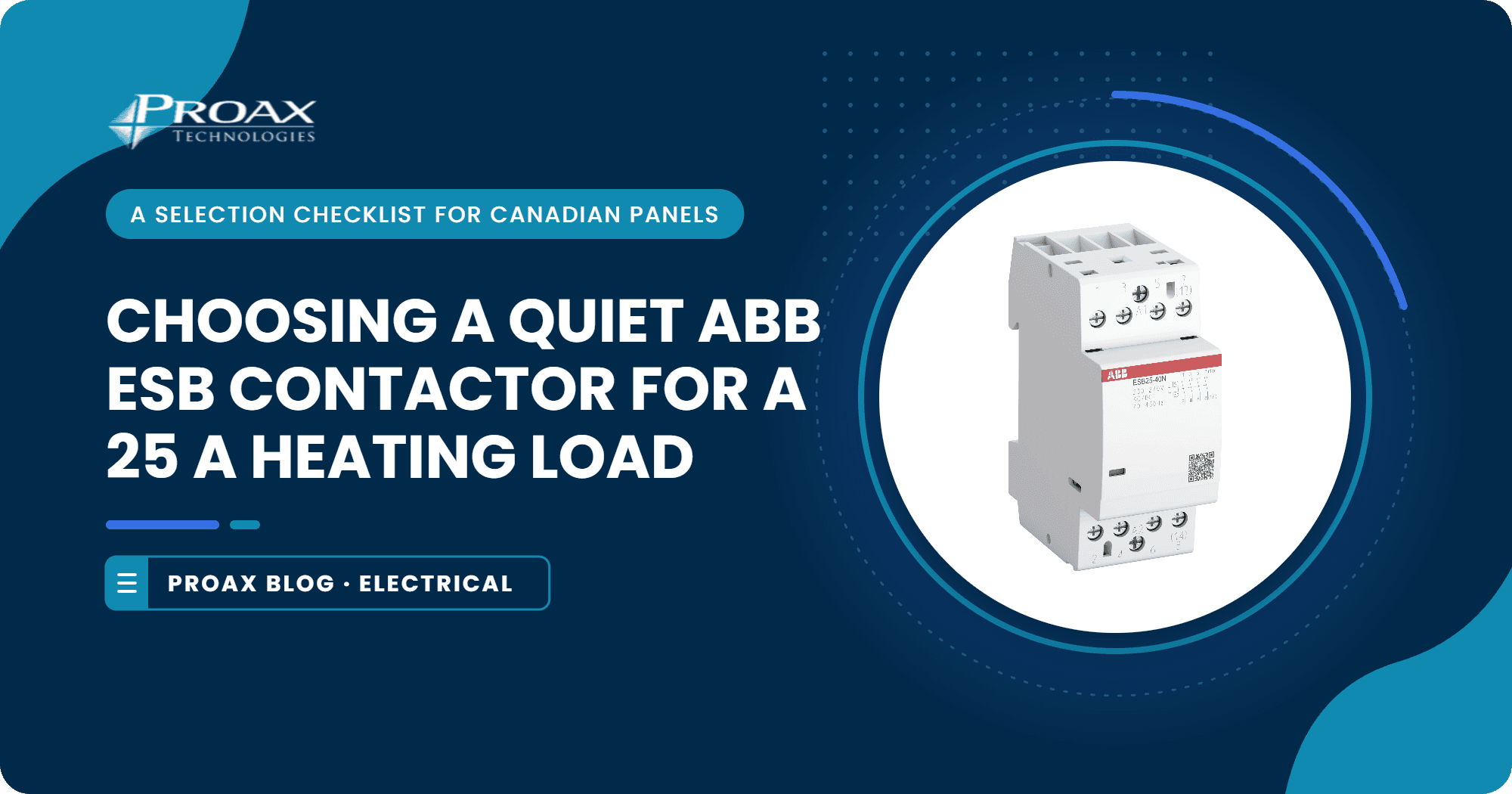
For a resistive heating load, choose an ABB ESB contactor by its AC‑1/AC‑7a rating, not its motor rating, and check that rating at your panel temperature and duty. An ESB25 is rated 25 A AC‑1/AC‑7a with the air around it at 55 °C or less, so a heater drawing exactly 25 A leaves no margin. Continuous heating in a warm, crowded panel may call for spacing or the next size up. Then confirm the number of poles, the coil voltage code for your control circuit and the Canadian certification for the exact order code before you buy.
A typical request from panel builders: a resistive heater rated 25 A at 240 V, a 120 V AC control circuit, a contactor that doesn't hum, and Canadian certification. ABB's ESB installation contactors suit quiet spaces because their AC/DC coils run hum‑free. The checks below show how to test an ESB against that load before you settle on an order code. If you're choosing contactors for motors instead, see our ABB contactor selection guide.
Which ESB Model Suits a Resistive Heater?
Which Coil Code Matches the Control Circuit?
Is the Exact Model Certified for Canadian Use?
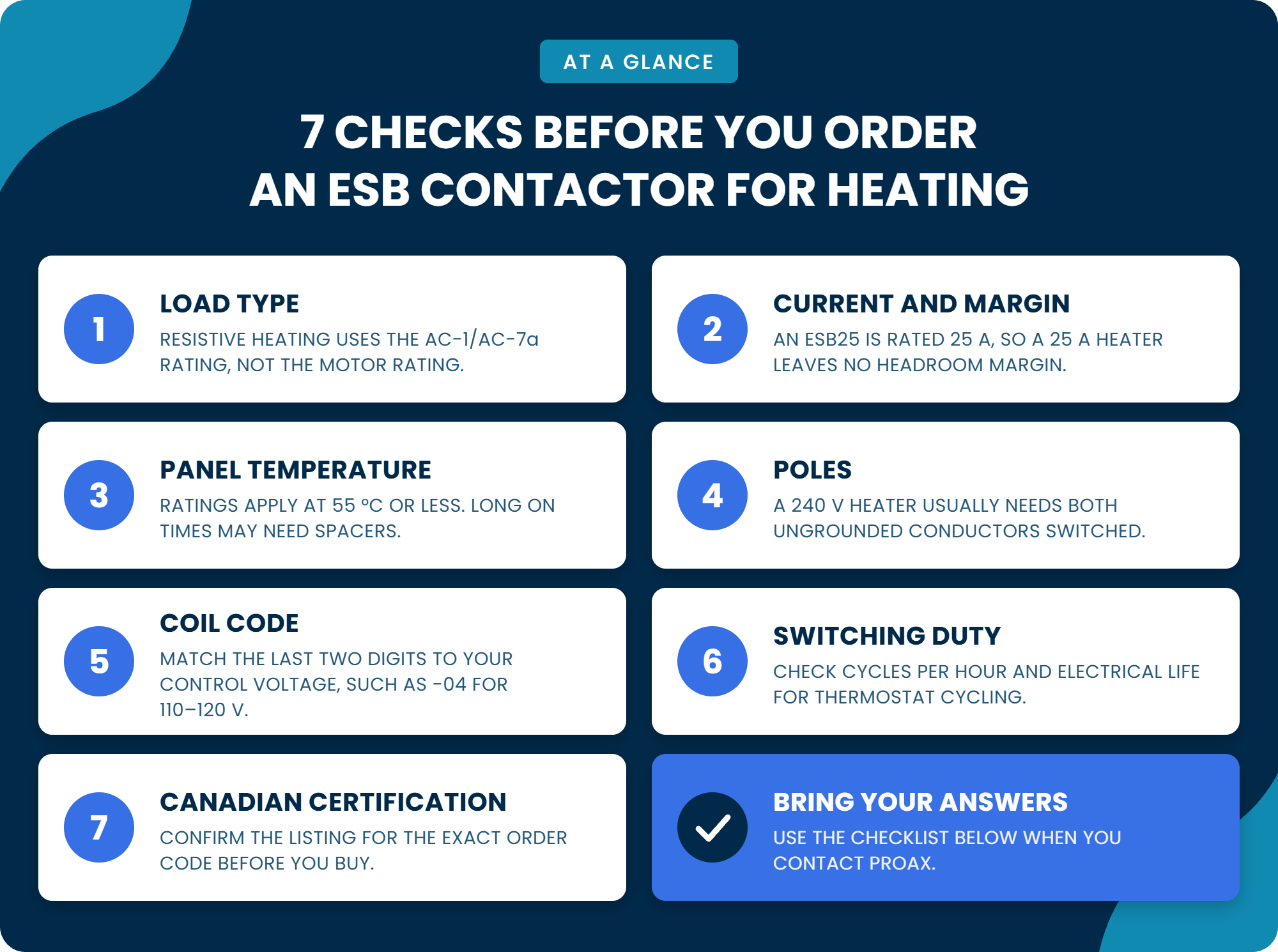
1. What Kind of Load Is It?
Contactors carry different ratings for different kinds of load. A resistive heater switches without the inrush of a motor, so it is rated under AC‑1, or AC‑7a for household and similar heating. Motor loads use AC‑3 or AC‑7b, and those ratings are much lower.
Resistive and Heating Loads
The ESB25 is rated 25 A for non-inductive or slightly inductive loads, which include resistive heaters.
Motor Loads
The same ESB25 is rated 9 A for motors at 230 V single phase. Size a heater from the AC‑1 rating and a motor from the AC‑3 rating.
2. Is 25 A Enough Margin?
A 6 kW heater at 240 V draws 25 A, which uses the whole AC‑1/AC‑7a rating of an ESB25. That may work on paper, but continuous heating, a warm panel, supply voltage at the high end and element tolerance all push the real current and temperature up. Your technical lead decides the margin and checks it against the Canadian Electrical Code rules that apply to the installation.
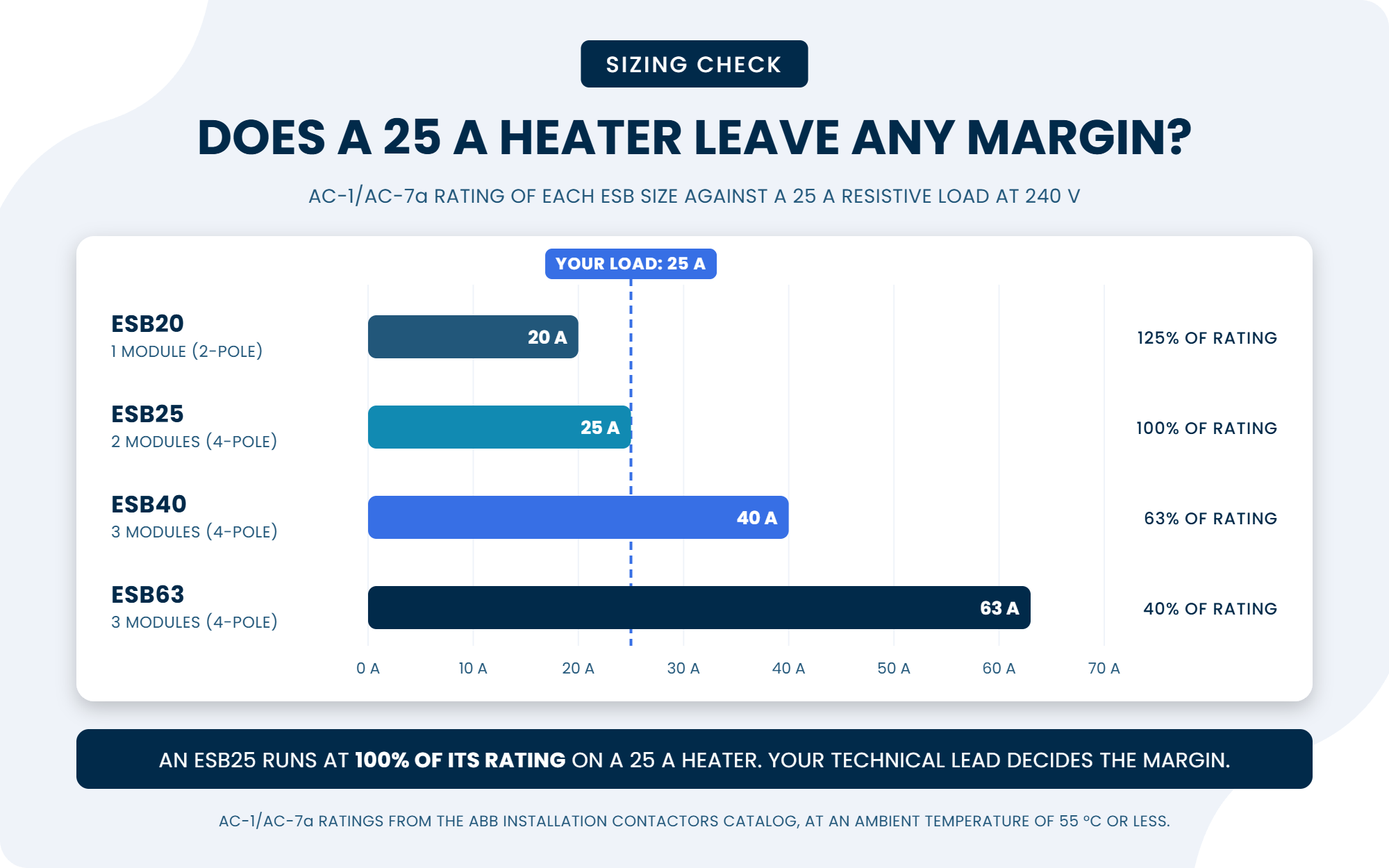
| Size | AC‑1 / AC‑7a | AC‑1 at 230 V, 1-Phase | AC‑1 Electrical Life | Width |
|---|---|---|---|---|
| ESB20 | 20 A | 4.6 kW | 150,000 | 1 module (2‑pole) |
| ESB25 Exactly at Load | 25 A | 5.8 kW | 130,000 | 2 modules (4‑pole) |
| ESB40 Next Size Up | 40 A | 9.2 kW | 150,000 | 3 modules (4‑pole) |
| ESB63 | 63 A | 14.5 kW | 100,000 | 3 modules (4‑pole) |
Exactly at the Rating
If the heater draws exactly 25 A, ask your technical lead whether the ESB40 is a better fit. It takes more DIN rail space, so check the panel layout too.
3. How Warm Is the Panel?
ABB rates ESB contactors with the air around the contactor at 55 °C or less. Heating contactors often stay on for long periods and sit side by side, which raises the temperature inside the enclosure.
When ESB contactors sit side by side with ON times longer than an hour, ABB calls for a distance spacer after every second contactor. It isn’t needed at 40 °C or less, or for ESB16..N and ESB20..N contactors.
4. How Many Poles Does It Need?
A 240 V heater in a Canadian panel is normally fed by two ungrounded conductors, so plan to switch both. The ESB25 comes in 2‑pole and 4‑pole versions with different mixes of normally open and normally closed contacts, and the contact code in the order number tells you which.
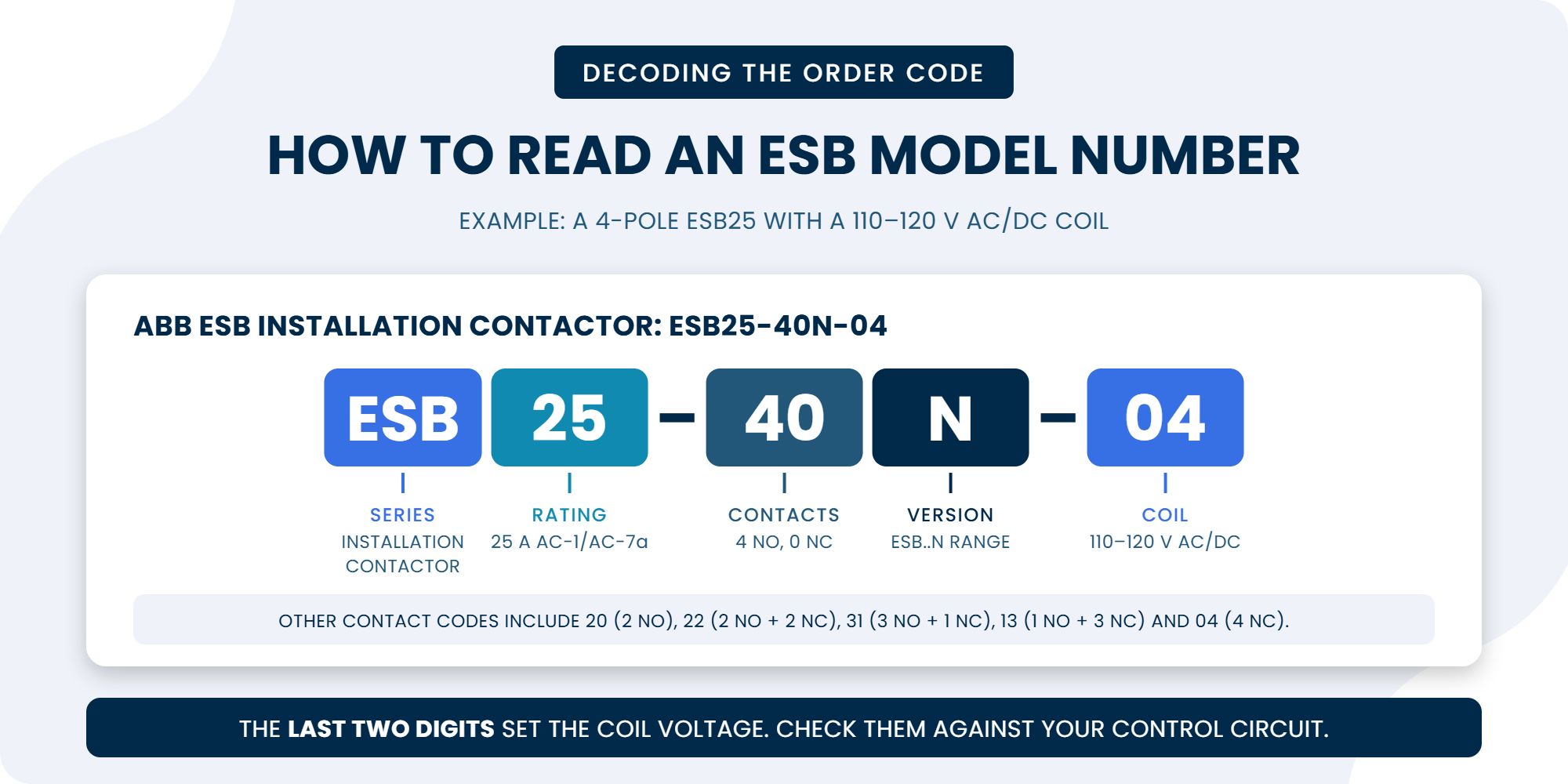
5. Which Coil Code Matches the Control Circuit?
The last two digits of the order code set the coil voltage. ESB coils run on AC or DC, so one code covers both. For a 120 V AC control circuit, look at the -04 versions, which are listed as 110–120 V.
| Coil Code | Coil Voltage (AC/DC) |
|---|---|
| -14 | 12 V |
| -01 | 24 V |
| -02 | 42 V |
| -03 | 48 V |
| -04 For 120 V Control | 110–120 V |
| -06 | 230–240 V |
| -07 | 400–415 V |
6. How Often Will It Switch?
Thermostats and temperature controllers can cycle a heater many times an hour. Compare the expected cycles with the contactor’s switching frequency and electrical life.
Maximum Switching Frequency
For ESB contactors up to 63 A. The ESB100 is limited to 150 cycles per hour.
AC‑1 Operations, ESB25
At 6 cycles an hour, around the clock, a heater reaches that number in about 2.5 years.
Fast Cycling
If the controller switches the heater every few seconds, as with time-proportioned control, ask whether a solid-state relay suits the load better.
7. Is the Exact Model Certified for Canadian Use?
ABB’s catalog lists UL 60947-4-1 ratings for the ESB range, including a 25 A general use rating at 240 V for the ESB25, and ABB’s product data lists a UL file number. Canadian installations need certification that covers Canada, such as a cULus or CSA mark, on the exact order code you install. Don’t assume it from the series.
Ask for the Evidence
Before you order, ask for the certificate or listing that covers your exact order code, and check that its ratings match your load. Your inspection authority may ask to see it.
Lead times can also differ between coil codes and contact versions, so ask Proax to check availability for each candidate order code.
Where the ABB ESB Fits
ESB contactors suit heating, lighting and ventilation loads where contactor hum would be noticed, such as hotel rooms, homes and offices, as well as industrial panels.
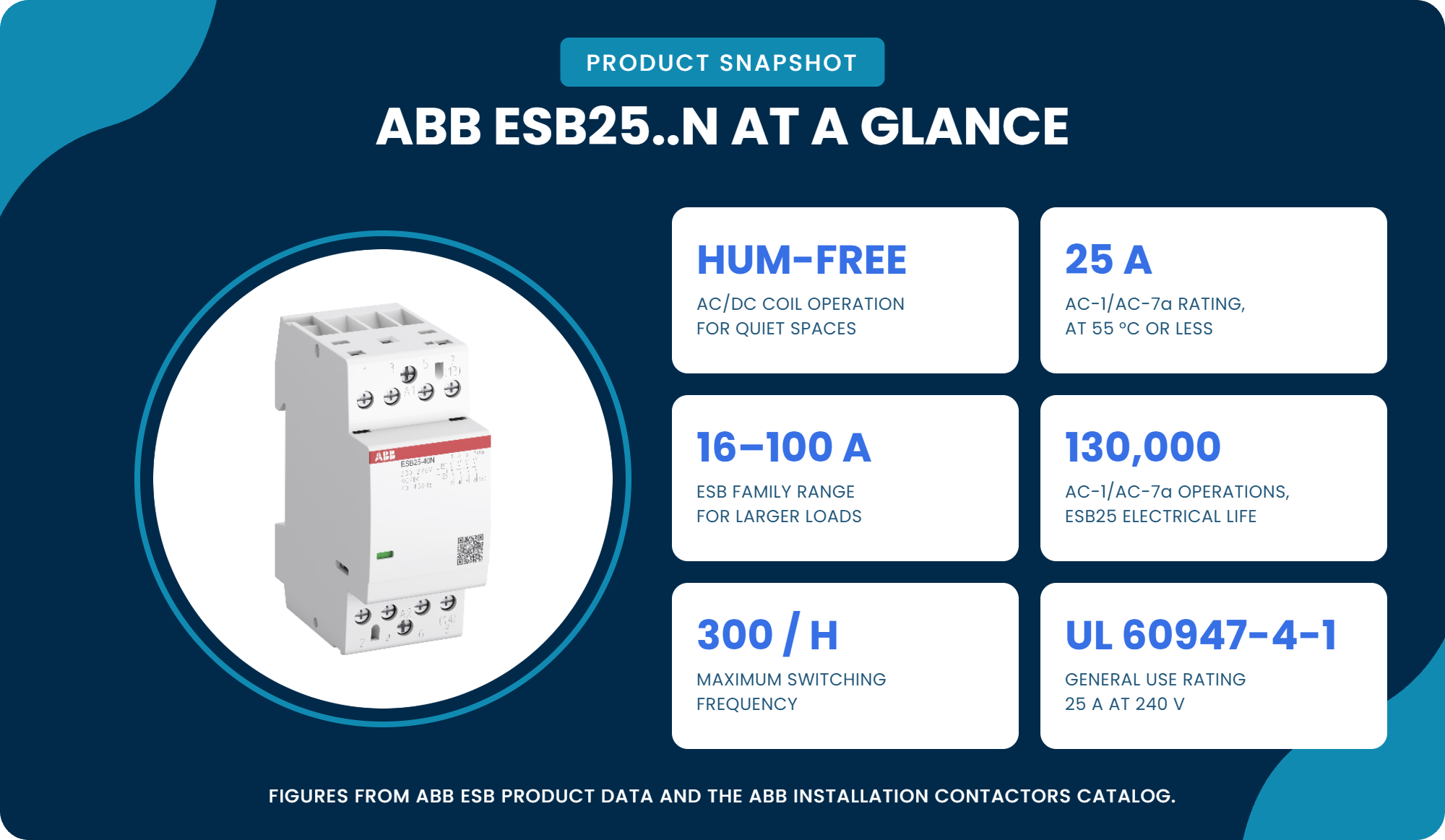
Hum‑Free
AC/DC coils run without audible hum.
AC or DC Control
One coil code covers both AC and DC control voltages.
16 to 100 A
A family of sizes, so you can step up for margin.
Overvoltage Protection
Integrated in the coil circuit, according to ABB.
Contact Options
2‑pole and 4‑pole versions with NO and NC combinations.
Distance Spacers
ESB-DIS spacers for long ON times in warm panels.
Sources: ABB ESB25..N installation contactor, the ABB installation contactors catalog and ABB installation contactors at Proax.
When to Ask About a Different Contactor
- The Heater Draws Close to the Full Rating Continuously
- The Panel Runs Hot or Contactors Are Packed Together
- The Load Is a Motor or Compressor, Not a Heater
- The Exact Order Code Lacks the Canadian Certification You Need
- The Heater Switches Many Times an Hour
Checklist: What to Gather Before You Contact Proax
A Heating Contactor Selection Goes Faster With This Information:
Need a Quiet Contactor for a Heating Load?
Send us the heater rating, supply and control voltages and the certification you need, and our in-house team will help you check ESB options and lead times.